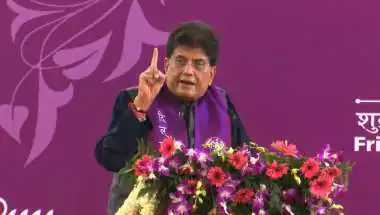
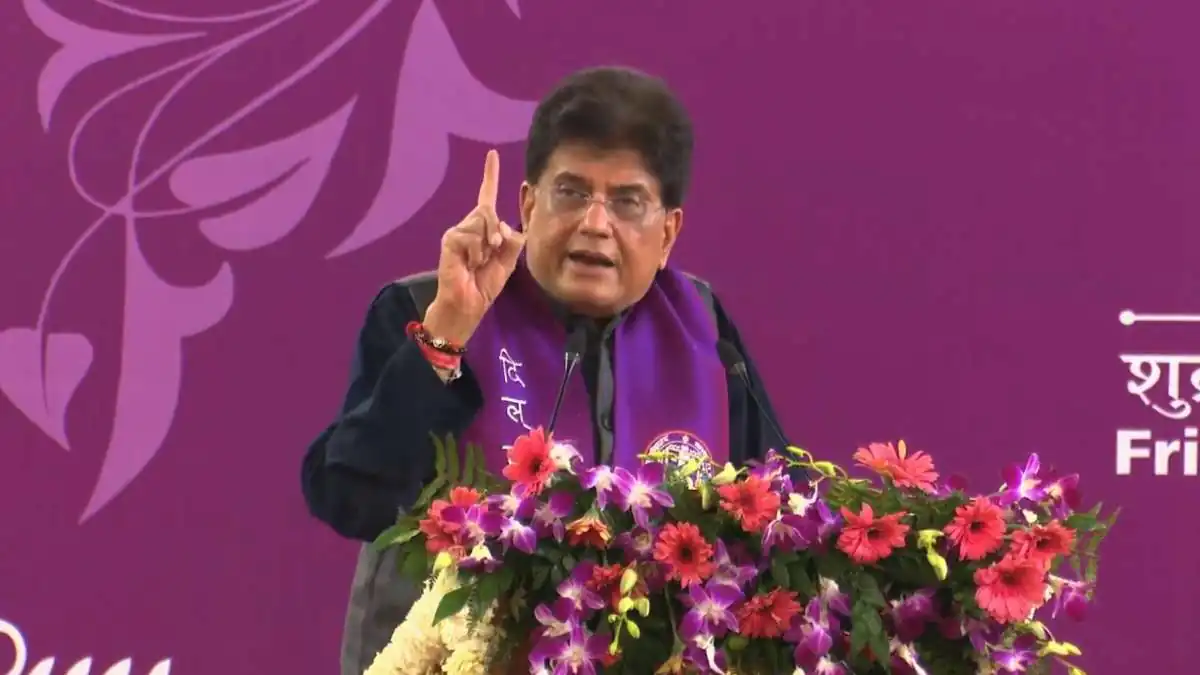
Convocation speeches usually look back at what students have achieved. The speech at the University of Delhi's 103rd Annual Convocation on Friday looked ahead instead. Commerce and Industry Minister Piyush Goyal asked the graduating class to see their degrees as a starting point for building businesses, solving problems and widening opportunity, not as a ticket to a job.
The timing gave his message extra weight. This year for the first time, students will receive their degrees in the same year they complete their programmes. The university had said the ceremony would cover 85,231 undergraduate, 7,235 postgraduate students and over 400 PhD scholars. So a very large group of young people entered the job market on the same day, and many of them heard a minister tell them not to wait for jobs to come to them.
Goyal began with a broad picture of how India has changed in the last ten years. He said around 50 crore people had moved out of extreme poverty in that time. He then turned to entrepreneurship. According to the minister, India has grown from a few hundred startups a decade ago to around 2.5 lakh, including more than 130 unicorns.
He said young Indians are now creating jobs rather than only looking for them. In his view, this generation is more willing to innovate, try new things and recover from failure. He also put responsibility on the graduates. Their success, he said, should help widen opportunities for less privileged people, not only advance their own careers.
He linked this to Prime Minister Narendra Modi's goal of Viksit Bharat 2047. Goyal urged students to adopt the five national commitments set out by the Prime Minister, including building a developed India, taking pride in Indian heritage, strengthening national unity and carrying out civic duties.
A practical checklist for the real world
The most practical part of the speech was a list of six principles for success: dream big, keep a positive outlook, stay focused, keep learning throughout life, put health first and treat challenges as chances to grow.
The point about lifelong learning matters most for this class. Goyal noted that technologies such as artificial intelligence are reshaping industries and workplaces, so a degree earned today will not be enough on its own for long. Graduates will need to keep learning and adapting.
He also reminded the audience that only a small share of India's young people get into institutions like Delhi University. He called the day the result of years of hard work, and congratulated families as well as students.
Why it matters
The speech showed how the government wants young Indians to think about their careers: as founders and innovators who also help the people around them, with the 2047 goal as the backdrop. Whether 92,000-plus new graduates can find that path will depend on how well jobs, funding and skills training keep pace. Goyal ended on a confident note, saying India's future will be shaped by the energy, innovation and commitment of its young citizens.
With inputs from IANS