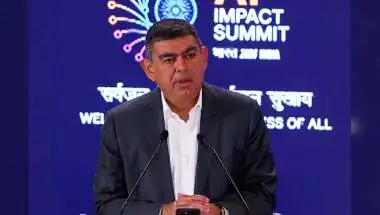
India's strong digital foundation and vast pool of engineering talent position the country to become a global leader in artificial intelligence-driven innovation, while creating a new generation of entrepreneurs, according to technology executives speaking on Monday.
Speaking in separate interviews with IANS in Seattle, Rhythm CEO and co-founder Vetri Valor and Veeam CEO Anand Eswaran stressed that the country should focus not only on job creation but also on building an innovation-driven ecosystem that enables millions of Indians to launch and scale businesses.
Eswaran said India has already established the building blocks required for large-scale technological transformation through its digital identity and digital payments infrastructure, framing these systems as a critical head start for the country's broader AI ambitions.
A Chance to Demonstrate AI's Positive Impact
"India has the opportunity right now to apply AI and show, demonstrate outcomes which the world, you know, can use to get the outcomes of AI to a better place for humanity," he stated, positioning India not merely as a consumer or adopter of AI technology, but as a potential source of models for responsible and beneficial AI deployment that other countries could learn from.
Crediting Leadership for Digital Progress
He credited Prime Minister Narendra Modi's leadership with strengthening India's position in global innovation. "Building digital infrastructure that operated across more than a billion people was an especially difficult achievement," he noted, acknowledging the scale and complexity involved in deploying digital systems across India's vast population.
Potential Applications Across Key Sectors
Eswaran argued that India has the capability to develop AI-driven solutions in areas such as agriculture, healthcare and public services, creating applications that can increase crop yields, combat infectious diseases and deliver measurable benefits to society. These sectors represent areas where AI could address longstanding structural challenges specific to India's development context, while also potentially offering solutions applicable to other countries facing similar issues.
Global Potential Beyond Domestic Use
According to him, the country's technological ecosystem presents an opportunity not only to serve domestic needs but also to build solutions that can be adopted globally, suggesting that India's AI development could eventually become an export in its own right, rather than being limited to addressing challenges within the country alone.
A Call to Prioritise Entrepreneurship
Valor echoed many of these views but argued that India should place greater emphasis on creating entrepreneurs alongside generating employment opportunities, offering a somewhat distinct emphasis from Eswaran's more sector-specific application focus.
Moving Beyond a Jobs-Only Framework
Valor said discussions around economic development often focus narrowly on job creation, but the country should also work toward building an ecosystem that enables individuals to become business creators in their own right. With access to technology, talent and artificial intelligence, India has the potential to produce millions of entrepreneurs, he said, framing AI as a tool that could meaningfully lower the barriers to starting new businesses.
The Role of the Indian-American Community
According to Valor, the Indian-American community can play a valuable role in this transformation by sharing technical expertise, mentoring founders and contributing policy ideas that help India navigate emerging technological shifts, positioning the diaspora as an active contributor to India's domestic innovation ecosystem rather than a separate, disconnected community.
Lessons From the Diaspora's Own Journey
Beyond technology, he said, lessons learned from the entrepreneurial journeys of Indians in the United States can provide useful insights for policymakers and aspiring founders in India, suggesting that the diaspora's collective experience building companies abroad could offer practical, transferable knowledge for those building businesses within India itself.
AI as a Democratising Force
Discussing artificial intelligence more broadly, Valor described AI as a powerful equaliser that can democratise access to information and knowledge. He said information gaps have historically prevented many individuals from realising their full potential, and AI is helping bridge those gaps by making expertise and insights more accessible, framing AI's value not just in terms of economic opportunity or entrepreneurship, but as a tool capable of addressing longstanding inequities in who has access to specialised knowledge and guidance.