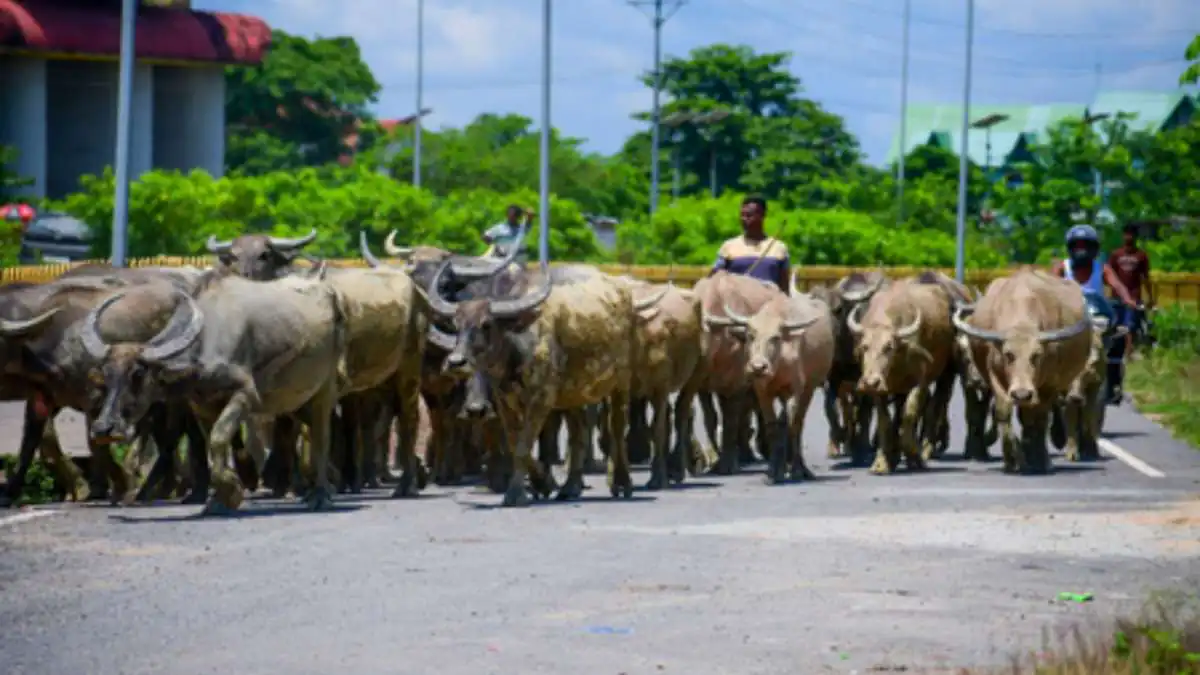
For a small dairy farmer, losing a milch animal can mean losing a major source of household income. Livestock insurance is meant to cushion that blow, but the process of getting a policy and settling a claim has often been slow and paper-heavy. The Centre now plans to move it online.
The Department of Animal Husbandry and Dairying will launch the Livestock Insurance Portal on Monday, according to an official statement issued on Sunday. Rajiv Ranjan Singh, alias Lalan Singh, Union Minister for Fisheries, Animal Husbandry and Dairying, will launch the platform.
The portal will provide a single, integrated digital platform for policy issuance, claim processing, monitoring and reporting for animals insured under the department's Livestock Insurance Scheme.
It is being developed as a web-based workflow under the National Livestock Mission. The new interface is expected to cover registration, insurance coverage and related protection services, with beneficiaries able to access information online.
It will also support real-time monitoring and data-driven management of livestock insurance programmes, which the government says will improve service delivery across the country.
Built for Farmers in Their Own Language
To make it easier to use, the portal will be available in 11 regional languages besides Hindi and English. For farmers in rural areas, being able to read policy details and claim status in a familiar language could be one of the most practical benefits of the platform.
How the Scheme Works
Under the current framework, beneficiaries, including small and marginal farmers, pay 15% of the insurance premium, while the Centre and states jointly fund the remaining 85%. In most states, the government share is split 60:40 between the Centre and the state; in Himalayan and Northeastern states it is 90:10, and in Union Territories the Centre bears 100%.
Subsidised coverage extends to as many as 10 cattle units per household for most eligible animals, with separate limits for pigs and rabbits. One cattle unit equals 10 small animals such as sheep, goats, pigs or rabbits.
Why It Matters: Claims Are Where Farmers Struggle
The biggest test of any insurance scheme is how quickly claims are paid. Under National Livestock Mission guidelines, claims are to be settled within 15 days of the required documents being submitted, and insurers who miss this deadline are liable to pay a penalty of 12% compound interest per year to the beneficiary.
A digital workflow that tracks every stage of a claim can make such timelines easier to monitor and enforce. It can also give farmers visibility into where their claim stands, instead of depending on repeated visits to offices.
RFID Tags: Fixing the Identification Problem
Animal identification is central to claim settlement. At present, ear tags are issued when animals are insured. The Centre is now exploring radio-frequency identification (RFID) tagging to improve animal identification and assist claim settlement. Better identification could reduce disputes over whether a dead animal is the one that was insured.
The Numbers So Far
According to Union government data, the programme's latest five-year reference period recorded 60.8 lakh insured animals, with ₹161.07 crore released under the scheme during the same period.
Insurance also has a benefit beyond compensation: it can help farmers access bank loans by using insured livestock as a basis for credit.
What Comes Next
With the launch set for Monday, the focus will shift to implementation: how quickly states onboard farmers, whether claims move faster, and whether the RFID plan moves from consideration to rollout.
With inputs from IANS.