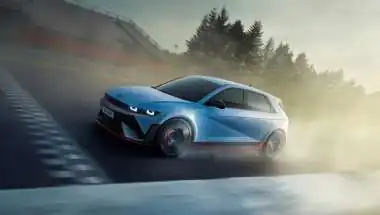
The August numbers point to a healthy underlying demand cycle, backed by rising infrastructure spending, strong replacement cycles and continued consumer appetite for both passenger and commercial vehicles.
Hyundai Motor India: A Record August Domestic Tally
Hyundai Motor India led the pack in the passenger vehicles space with its best-ever August performance on the domestic front.
The company reported total monthly sales of 65,796 units for August 2026, up 8.8 per cent year-on-year. Within that, domestic sales stood at 54,396 units — a strong 23.6 per cent YoY rise, marking the company's highest August tally on record. Exports for the month came in at 11,400 units.
Speaking about the performance, Tarun Garg, MD & CEO of Hyundai Motor India Limited, sounded a note of confidence about the company's broader trajectory.
"We continue to sustain strong growth momentum in FY2027, with domestic sales growing by 12.6 per cent year-on-year during the April-August period," he said.
He also acknowledged that exports had been impacted in August by logistical constraints linked to the West Asia conflict and the broader geopolitical environment — but expressed optimism about export demand improving in the coming months as the geopolitical situation stabilises.
That framing is important. It reflects a company reading its market clearly, celebrating a domestic all-time high while also being transparent about the external headwinds shaping its international performance.
Tata Motors: 49% Growth Powered by Commercial Vehicles
Tata Motors delivered one of the standout performances of the month, reporting combined domestic and international sales of 44,411 units in August, up a strong 49 per cent year-on-year.
The commercial vehicle segment led that surge. Domestic MH&ICV (medium and heavy & intermediate commercial vehicles) sales stood at 17,531 units — up 31 per cent year-on-year. Combined MH&ICV domestic and international sales came in at 18,920 units, up 29 per cent.
That kind of growth in the medium and heavy commercial vehicle segment carries significant broader signals for the Indian economy. MH&ICV demand is closely linked to industrial activity, freight movement, infrastructure execution and long-haul logistics — all of which appear to be firing strongly heading into the second half of FY27.
Mahindra Trucks and Buses: A 47% Growth Story
Mahindra & Mahindra also reported a strong performance in its heavier commercial vehicle segment. The company said its overall sales — including exports — in the Trucks and Buses business (commercial vehicles above 3.5 tonnes) stood at 2,495 vehicles in August, up 47 per cent year-on-year.
Vinod Sahay, Executive Chairman of SML Mahindra and President for Mahindra's Trucks, Buses and Construction Equipment businesses, gave a straightforward assessment of the demand drivers behind the growth.
He said the segment continues to be supported by higher infrastructure spending, rising freight demand and replacement demand. However, firms in the sector are also navigating rising input and fuel cost pressures. Additionally, he noted that volumes were muted in August 2025 due to anticipated GST changes — meaning the growth this month also reflects a low base effect from the previous year.
That's an important, honest framing. It highlights both the genuine strength of the underlying demand and the base effect that partly amplifies the year-on-year percentage gain.
The Bigger Trend: Passenger Cars Meet Commercial Vehicles
Together, the August numbers from Hyundai, Tata Motors and Mahindra paint a picture of an auto industry firing on multiple cylinders.
Passenger vehicle demand — reflected in Hyundai's record August domestic performance — continues to reflect strong consumer confidence, expanding disposable income and increasing preference for premium mobility experiences.
Commercial vehicle demand — reflected in the standout performances of Tata Motors and Mahindra — reflects the strength of India's underlying industrial and infrastructure economy. Every MH&ICV truck sold represents actual freight movement being enabled, actual infrastructure being executed, and actual economic activity being supported.
That parallel strength across passenger and commercial vehicles is one of the most positive signals the auto industry can send about the overall health of the Indian economy.
Why It Matters
Monthly auto sales are one of the most closely watched macroeconomic indicators in India. They serve as real-time proxies for consumer confidence, rural income, freight movement, industrial activity and overall economic sentiment.
When multiple major auto manufacturers simultaneously post strong monthly numbers — particularly with commercial vehicles leading the way — it signals not just a good month for the sector, but a stronger underlying macroeconomic picture.
For the broader Indian economy, healthy commercial vehicle sales tell us that freight demand is high, infrastructure execution is active, replacement cycles are strong, and end-market business confidence is robust. All of these are important building blocks of sustained economic growth.
Sectoral and Industry Impact
For India's auto industry, the August performance strengthens the case for continued investment in expanded manufacturing capacity, deeper distribution networks and product innovation across price points. For dealers, financiers and ancillary suppliers, the strong numbers translate into higher activity across the value chain — from showroom footfalls to auto financing to component orders.
For the commercial vehicle ecosystem specifically, the surge in demand also reflects a broader shift underway in Indian logistics — one driven by faster infrastructure execution, growing e-commerce reach, expanding organised freight networks and consistent replacement demand as older fleets are upgraded.
External Challenges to Watch
At the same time, the industry is not without its pressure points. The West Asia conflict and broader geopolitical uncertainty are impacting global logistics chains — a challenge acknowledged directly by Hyundai in its August commentary. Rising input costs and fuel prices continue to weigh on manufacturers, particularly in the commercial vehicle segment. And global supply chain volatility remains a factor to watch across the coming quarters.
For automakers and their supplier ecosystems, managing these headwinds while sustaining domestic growth momentum will be a key operational focus in the months ahead.
Cultural and Consumer Impact
The strong pull for both passenger and commercial vehicles also reflects deeper cultural and consumption trends. Passenger buyers are increasingly seeking premium, feature-rich SUVs and hatchbacks. Small businesses, logistics operators and fleet managers are investing in newer, more efficient commercial vehicles to service the rising freight demand. And across categories, first-time and upgrade buyers alike are showing willingness to spend on quality mobility solutions.
The Bigger Picture
Tuesday's August sales numbers from Hyundai, Tata Motors and Mahindra do more than record another good month for individual companies. They collectively signal the strength of India's automotive industry as it steps into the most important sales quarter of the year — the festive season.
With passenger demand hitting record levels for Hyundai, commercial vehicle demand posting strong double-digit growth for Tata Motors and Mahindra, and industry-wide investments in electric mobility, digitisation and premium product portfolios continuing to expand, the Indian auto industry is delivering exactly the kind of performance that reflects broader economic health.
For consumers heading into showrooms across the country in September and October, the story is likely to only strengthen — with more product launches, more festive-season offers and more choice than ever before across categories, price points and technologies.
And for India's larger economic narrative, the August numbers are yet another data point in a growing pattern — one that continues to point toward a country moving forward with confidence, capability and consistent consumer demand. As the wheels of India's auto sector keep turning, they carry with them one of the clearest and most reliable indicators of the country's ongoing economic momentum. And August 2026, by every measure, has been another strong step forward.