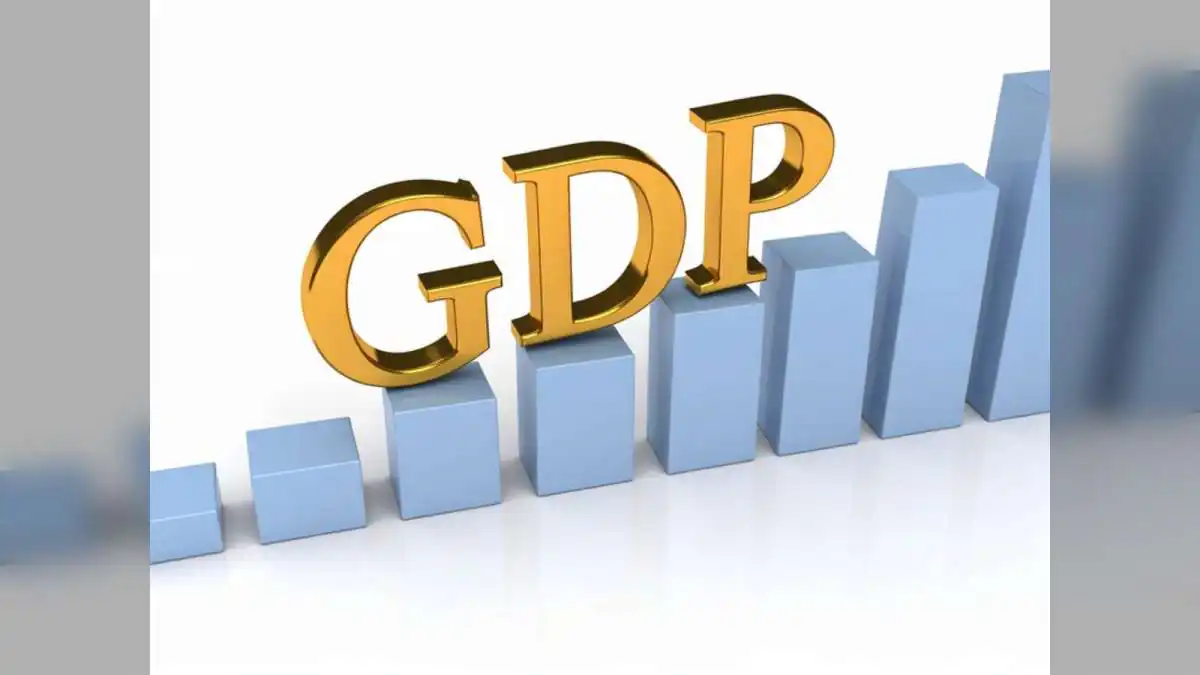
India's growth story is set to hold its ground through the coming financial year. A new report by consulting major EY has projected that India's real GDP growth will likely remain resilient at 7-7.2 per cent in FY27, supported by robust domestic demand and the government's continued focus on capital expenditure. On the nominal side, the report projects growth of 12.5-13 per cent — a combination that would once again position India as one of the fastest-growing large economies in the world.
According to EY, India's growth outlook remains relatively strong despite the headwinds shaping the global economy. Geopolitical uncertainties, elevated crude oil prices and a weaker global trade environment continue to weigh on many other emerging markets — but India's growth architecture appears increasingly insulated by its own internal engines.
Strong domestic economic activity and sustained public investment are expected to provide the two most important pillars of support for the country's growth through the year. That combination — a large, resilient consumer base plus a proactive public capex cycle — is what has consistently allowed India to outperform many of its emerging market peers over recent years.
Industrial Activity: A 23-Month High
One of the most encouraging data points highlighted in EY's report is a sharp uptick in industrial activity. Growth in the Index of Industrial Production (IIP) accelerated to a 23-month high of 7.3 per cent in June 2026 — a strong signal that India's industrial engine is firing across sectors.
As a result, average industrial growth during the first quarter of FY27 rose to 5.7 per cent, the highest level in eight quarters. That's a meaningful acceleration and reinforces the case that manufacturing and industrial activity are once again playing a leading role in India's economic momentum.
Manufacturing Leads From the Front
Manufacturing has been the standout contributor to this improvement. Output rose 7.8 per cent in June — a robust number that reflects strength across multiple sub-segments.
Electrical equipment, motor vehicles, textiles and food products were among the stronger-performing segments during the period, indicating that the momentum isn't concentrated in a single vertical but is well-diversified across the manufacturing base. That's an important sign for both jobs and export earnings.
But Some Moderation Is Visible
The report also strikes a note of realism. Some high-frequency indicators suggest that the pace of expansion may be moderating slightly. The Manufacturing PMI declined to 53.5 in July from 54.2 in June, while the services PMI fell more sharply to 53.3 from 57.4.
However, both indices remained above the 50-point mark — the critical threshold that separates expansion from contraction. That means economic activity continues to grow, even if the pace is coming off recent highs. It's the kind of measured deceleration that is expected in an economy running near the top of its cycle.
Credit Conditions Stay Supportive
One of the strongest signals of underlying economic momentum is what's happening in the credit market. EY noted that gross bank credit growth accelerated to a 25-month high of 18.6 per cent in June — a striking indicator that businesses and other segments of the economy have consistent access to financing.
Strong credit growth is typically both a reflection of demand and a catalyst for further activity. It signals that Indian corporates, MSMEs, retail borrowers and infrastructure players are all borrowing to build, expand and consume — the classic ingredients of a broad-based growth cycle.
The Sharp Rebound in Government Capex
Perhaps the most striking data point in EY's analysis is the sharp recovery in government capital expenditure. Government capex growth surged to 23.7 per cent in the first quarter of FY27, following a contraction of 23.3 per cent in the fourth quarter of FY26.
That kind of Q-on-Q swing — from deep contraction to strong expansion — reflects a deliberate policy push to front-load public investment and accelerate infrastructure spending early in the fiscal year. Historically, government capex has served as a critical enabler for private sector activity, especially in construction, cement, steel, machinery, logistics and industrial capital goods.
Fiscal Discipline Alongside Growth
Crucially, the strong capex push has not come at the cost of fiscal discipline. The fiscal deficit remained contained at 18.2 per cent of the annual budget target during the period.
That combination — increased capex, controlled fiscal deficit — is exactly what markets, rating agencies and international investors have been asking for. It suggests that the government is investing aggressively without losing its grip on macro-financial stability.
EY concluded that this renewed momentum in capital expenditure should help sustain domestic demand and strengthen the prospects for real GDP growth in FY27.
Why It Matters
India's ability to project stable, 7 per cent-plus real GDP growth in an environment defined by global uncertainty is a significant macroeconomic signal. It reinforces India's positioning as one of the most resilient large economies in the world, and one of the few that appears capable of driving multi-year investment cycles independent of external cues.
For global investors, this outlook strengthens the case for continued capital allocation to Indian equities, debt and infrastructure assets. For Indian corporates, it supports capex planning, hiring decisions and long-term expansion strategies. For citizens, it points to continued momentum in jobs, wages and household consumption.
Industry Impact
For India's capital goods, cement, steel, EPC and infrastructure sectors, the sharp rebound in government capex is a direct tailwind. For banking and NBFC players, the 25-month high in credit growth signals a healthier lending environment. For consumer-facing sectors, resilient domestic demand supports strong volume growth ahead of the festive season.
For manufacturing exporters — particularly in electrical equipment, motor vehicles, textiles and food products — the strong IIP data reinforces confidence in India's ongoing manufacturing renaissance.
Institutional Impact
For policymakers, the EY report offers useful validation of the current macroeconomic direction — strong capex, controlled deficit, well-oriented industrial growth and expanding credit. It also serves as a signalling document for global institutions that track India's macro trajectory: rating agencies, sovereign wealth funds, multilateral lenders and international investors.
The Bigger Picture
India entering FY27 with 7 per cent-plus growth momentum, 12.5-13 per cent nominal growth potential, and a 23-month industrial high isn't just an economic story. It's a strategic story. It reinforces India's position at the heart of the next global growth cycle, at a time when many other economies are still struggling to find footing.
The combination of strong domestic demand, disciplined fiscal management, aggressive public investment and expanding credit paints the picture of an economy that is confidently building for the future. As the fiscal year progresses, the challenge for policymakers, corporates and financial markets will be to convert this momentum into sustained, inclusive and long-lasting growth. If EY's projections hold true, FY27 will not just be another good year for India. It could be another chapter in one of the most compelling economic stories the world is watching today.