Adobe has signed memorandums of understanding (MoUs) with Delhi, Uttar Pradesh, Uttarakhand, Tamil Nadu, Bihar, Assam and Goa. Together, these states will provide thousands of government schools with free access to Adobe Express for Education — a digital media app designed to engage students with projects that improve learning outcomes and build future-ready skills. The scale is what makes the announcement stand out: 7.8 million users translates to one of the largest single-vendor software deployments in Indian public education in recent memory.
What Students and Teachers Actually Get
Beyond just software access, students and teachers will benefit from Adobe Digital Academy, which brings in a structured digital creativity and AI skill-building curriculum. The programme is designed to develop proficiency in three specific areas — creative problem-solving, digital storytelling, and AI-assisted content creation — three capabilities increasingly considered non-negotiable for the next generation of learners.
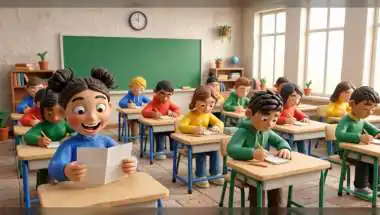
Teachers will be trained on how to integrate digital creativity into everyday classroom teaching, while students will use Adobe Express for school projects and creative expression. The company said this is aimed at enhancing skills for future careers in India's rapidly growing creative and digital industries.
Aligning With the National Education Policy
The initiative slots directly into the broader vision of India's National Education Policy (NEP), which emphasises the use of digital tools and AI to build creativity skills for future readiness. It also aligns with a very specific numeric target from the Union Budget 2026 — the creation of 2 million jobs in the Animation, Visual Effects, Gaming and Comics (AVGC) sector by 2030.
"The partnership builds on Adobe's longstanding commitment to education in India, and supports the government's National Education Policy — which emphasises the use of digital tools and AI to help build creativity skills for future readiness — and complements the Union Budget 2026's goal of creating two million jobs in the field of Animation, Visual Effects, Gaming and Comics (AVGC) by 2030," said Mala Sharma, Global Vice President and General Manager, Education, Adobe.
Schools on the Front Line
The rollout will reach some of the most important government school networks in the country — PM SHRI, the flagship schools under India's National Education Policy; CM SHRI, the state-led model school systems; Kasturba Gandhi Balika Vidyalayas (KGBV), which are focused on educating girls from marginalised communities; Kendriya Vidyalaya Sangathan (KVS); and a broader base of government schools across the seven states. Adobe has said the initiative will scale further to additional schools and states over time.
Why It Matters
The scale of this rollout signals a decisive shift in how digital skilling is being embedded into Indian classrooms. For years, ed-tech in India has been dominated by private, paid platforms serving urban middle-class students. Adobe's move flips the geography — placing high-grade digital creativity tools directly into the hands of students studying in state-run schools, many in tier-2 and tier-3 regions. The inclusion of KGBV schools, in particular, ensures that girls from underserved backgrounds are explicitly built into the digital creativity pipeline.
Industry Impact
The AVGC sector alignment is arguably the sharpest part of Adobe's strategy. India's animation, VFX, gaming and comics industry has been positioned by the Union Budget as a major job-creation engine, and equipping millions of school-age learners with core creative tools now creates the exact talent funnel that the sector will need by the end of the decade. In effect, Adobe is placing an early bet on becoming the default creative toolkit for India's future digital workforce.
The Skilling Layer Beyond Schools
The push extends beyond school students. Adobe has also partnered with NASSCOM FutureSkills Prime, a digital skilling initiative in collaboration with the Ministry of Electronics and Information Technology (MeitY), to offer complimentary access, industry-relevant courses, and certificates to learners across India. Combined, the school-level and skilling-level partnerships build a two-tier pipeline — one for classrooms, one for career-stage learners.
The Bigger Picture
Adobe's rollout is more than a corporate CSR gesture — it's a structural intervention. By marrying software access with curriculum, teacher training, government school networks and a national policy roadmap, the company is embedding itself into how India's next generation will learn creativity and use AI. If executed well, this could become one of the defining public-private education partnerships of the decade — and set a benchmark for how global tech majors participate in India's digital classroom story.