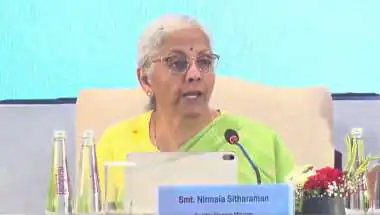
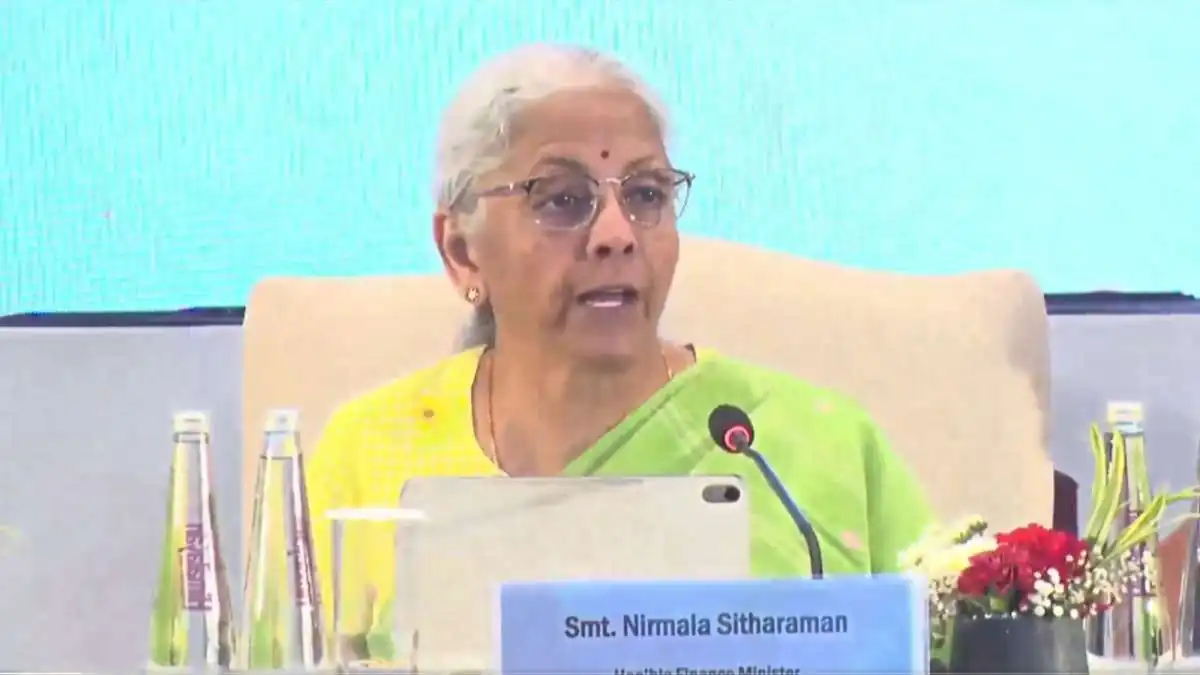
Finance Minister Nirmala Sitharaman said on Wednesday that tax administrations of BRICS countries must strengthen their collective voice in the ongoing renegotiation of international tax rules.
Addressing the inaugural session of the BRICS Tax Heads meeting, Sitharaman said that BRICS countries are large developing economies and source jurisdictions that have built significant domestic tax capacity from a low base, and their perspective is essential to making these negotiations fair and lasting.
India has proposed two new working groups, one on international taxation and transfer pricing, and the other on revenue statistics, as part of efforts to build institutional mechanisms that continue beyond India's 2026 chairmanship. Sitharaman said the two groups are intended to create institutional space for addressing issues faced by BRICS tax administrations.
A Focus on Fairness for Developing Economies
"Transfer pricing disputes cost developing countries' administrations disproportionately. Revenue frameworks that don't fit our system realities distort how we are seen and how we see ourselves," she observed, framing the initiative as an effort to correct structural imbalances in how developing economies are treated within global tax negotiation frameworks originally designed elsewhere.
Built to Outlast India's Chairmanship
The groups are designed to outlast India's chairmanship, Sitharaman said. China will take over the BRICS chairmanship in 2027, meaning these institutional mechanisms are intended to provide continuity across leadership transitions within the grouping rather than being tied specifically to India's current term.
A Shift Toward Digital Tax Systems
Sitharaman also highlighted that tax administrations are moving from paper-based and relationship-dependent processes to data-driven and digital systems. She added that India's experience with faceless assessment, pre-filled returns, real-time invoice authentication and AI-enabled taxpayer assistance has attracted interest from BRICS partners, positioning India's domestic tax reforms as a potential model for other member nations to draw from.
Institutionalising a Young Professionals Programme
The meeting also considered the institutionalisation of the BRICS Young Tax Professionals Programme as an annual event at the National Academy of Direct Taxes, Nagpur. The first in-person programme, held in April, brought together young tax officials from seven BRICS countries for a week-long programme on international taxation, laying the groundwork for this proposed annual continuation.
Existing Tools and Ongoing Development
India's efforts have developed the Tax Collaboration Tool, Tax Knowledge Hub and Cross-Learning Lab. A VAT Modernisation Report and HR Development Index are under development, reflecting a broader set of practical resources being built alongside the more formal working group structures.
A Network to Support Ease of Doing Business
The BRICS Tax Support Network, terms of reference for which are being finalised, intends to provide a practical platform for supporting tax administrations and promoting ease of doing business across BRICS countries. Sitharaman said the initiatives reflected a broader effort to build cooperation around technology, administration and people, tying together the technical, institutional and human capital dimensions of this tax cooperation agenda.
A Permanent Platform for Technical Exchange
Revenue Secretary Arvind Shrivastava said the international taxation and transfer pricing working group will provide a permanent platform for member administrations to exchange their experience in treaty interpretation, transfer pricing audits, advance pricing agreements and mutual agreement procedures, as well as multilateral negotiations, giving BRICS tax officials a dedicated forum for addressing some of the most technically complex aspects of cross-border taxation.
A Framework Suited to BRICS Economic Realities
The revenue statistics working group is developing a framework for measuring tax-system performance that reflects the realities of BRICS economies, rather than relying on frameworks developed for different economic systems, he added, underscoring a recurring theme throughout the meeting: that existing global tax measurement and negotiation frameworks were often built around the circumstances of developed economies and may not adequately capture the specific structural conditions faced by large developing economies like those within BRICS.