





































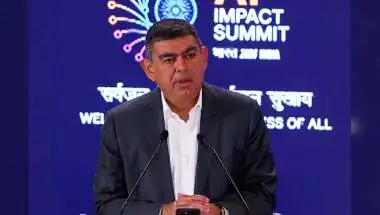






















Bill Gates: India Key Example of AI's Social Benefit
Bill Gates says AI is unlike past tech revolutions, calling for caution on its pace, while pointing to India as a model for deploying AI for social good.




Key Highlights:
- Bill Gates said AI is fundamentally different from the PC and internet revolutions he helped shape at Microsoft.
- He pointed to India as a key example of how AI could be rapidly deployed for social and developmental benefit.
- Gates said the world should consider slowing AI's advance to give society more time to prepare for its impact.
- He flagged cybersecurity as an immediate risk, warning AI tools could strengthen attackers' offensive capabilities.
- Gates said keeping AI under human control, once thought to be a far-off concern, has become more pressing given unexpected behaviour observed in reinforcement learning systems.
A Warning From One of Tech's Most Prominent Voices
Microsoft Co-founder Bill Gates has said that artificial intelligence is fundamentally different from previous technological revolutions, warning that society may not yet be ready for the scale and speed of change that lies ahead. Coming from someone who helped shape two of the most significant technological shifts of the past several decades, the personal computer and the internet, this caution carries particular weight.
India as a Model for AI's Social Potential
Despite his concerns about the pace of change, Gates underlined AI's extraordinary potential, specifically pointing to India as an important example of how the technology could be deployed rapidly for social and developmental benefit. "It's a stunning set of capabilities," Gates said, adding that India could demonstrate how "we can drive the good stuff as fast as possible." This framing positions India not merely as a market for AI adoption, but as a potential testing ground for how the technology's benefits can be maximised for broad social good, particularly in a country where developmental needs remain significant across healthcare, education and public service delivery.
Considering Whether to Slow AI's Advance
In a conversation with NDTV, the billionaire philanthropist said the world should consider slowing the advance of AI if doing so gives societies more time to prepare for the profound changes it could bring. This represents a notable position from a figure whose career has been defined by championing rapid technological innovation, suggesting that his concerns about AI's trajectory are substantial enough to prompt him to question a principle he has otherwise consistently advocated for throughout his professional life.