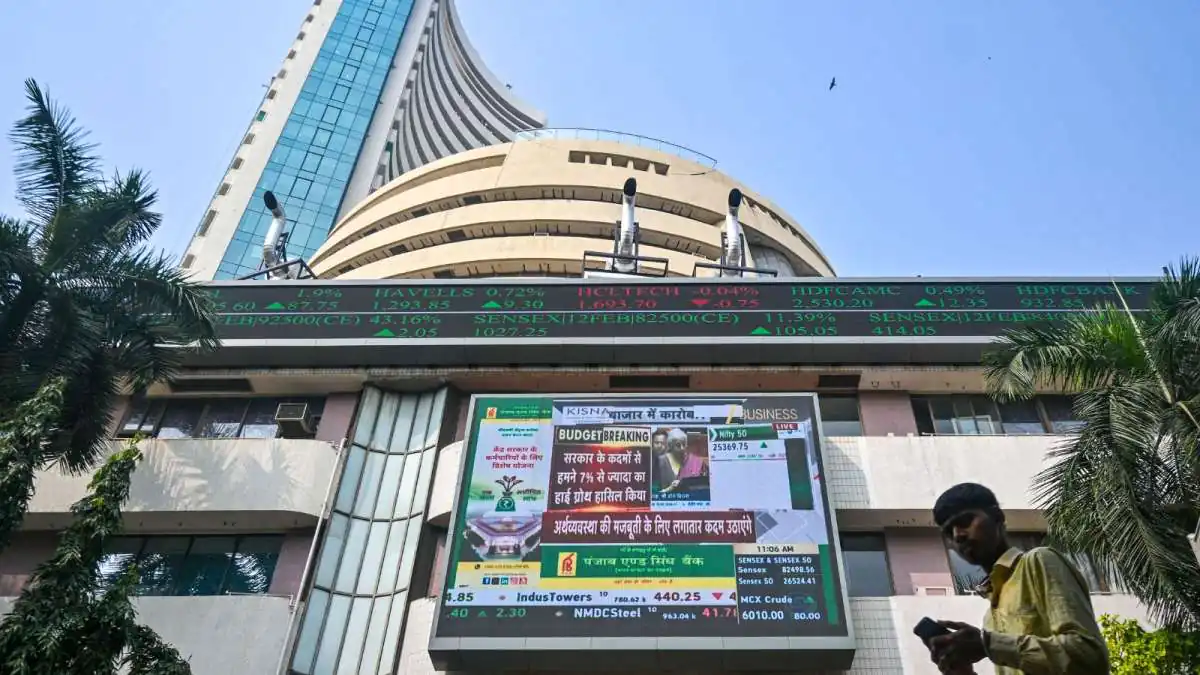

































































For most of this year, Indian markets leaned on domestic money while foreign investors sold. This week the roles flipped. Foreign institutional investors (FIIs) bought shares worth a net Rs 33,340 crore. Domestic institutional investors (DIIs) were net sellers in every session and offloaded Rs 24,190 crore.
That swap helped benchmark indices end the week higher. The bigger question for investors is whether the foreign buying will last.

The speed of the change stands out. FIIs have now bought for three weeks in a row, right after 10 straight weeks of selling. In the previous week alone, they put in about Rs 45,960 crore, which ended what had looked like a long exit.

October showed the earlier mood. FIIs were net sellers that month, pulling out Rs 24,475 crore after outflows of Rs 58,443 crore the month before. DIIs also recorded net outflows of Rs 28,943 crore in October. This is the second straight week that DIIs have sold, which suggests domestic funds may be taking profits while foreign buyers absorb the supply.
The Nifty rose 0.6 per cent for the week to close at 25,144.3. On Wednesday it touched an intra-week high of 25,424 before profit booking pulled it lower. Banks did the heavy lifting: the Bank Nifty gained 3.7 per cent. Smaller stocks also did well, with the Nifty Midcap 100 up 2 per cent and the Nifty Smallcap 100 up 2.6 per cent.
What could stall the rally
Analysts say the coming weeks depend on whether foreign money keeps coming in, and several outside factors could affect that.
The first is US-Iran tensions and what they do to crude oil prices. Softer Brent crude helped markets this week, which matters because India imports most of its oil. A sudden rise in oil prices could quickly hurt sentiment.
The second is inflation. Readings in both India and the US came in higher than expected, and that limited the market's gains. Expectations of a rate hike at the December policy meeting have grown. Investors are now waiting for the US Federal Open Market Committee (FOMC) minutes and India's WPI inflation data for clues on where interest rates are headed.
Why this matters for investors
For retail investors, the week shows that strong markets need both foreign and domestic buyers. Domestic flows have kept the market steady for much of the year. If FIIs keep buying while DIIs pause, prices can still rise, but the gains rest on one group of buyers and are more fragile.
The rally in banking stocks also matters. Banks tend to benefit early when foreign investors come back, partly because they are easy to buy in large amounts.
Brokerage Citi Research has a positive longer-term view. It expects the Nifty 50 to reach 28,000 points by the end of 2027. It cites a strong earnings outlook, lower oil prices and the chance that global spending on artificial intelligence slows down. If that happens, some foreign money may move away from AI-heavy markets and into India.
For now, the market's direction depends on what happens with oil, inflation data and the December rate decision.