







































































IMF Raises India’s FY27 Growth Forecast to 7%; China Slows to 4.5%
The IMF raised India’s growth forecast to 7% for FY27, calling it among the fastest-growing major economies despite high oil prices. Inflation seen at 5%, CAD widening to 1.5%.

M
Markets
NEWS CARD

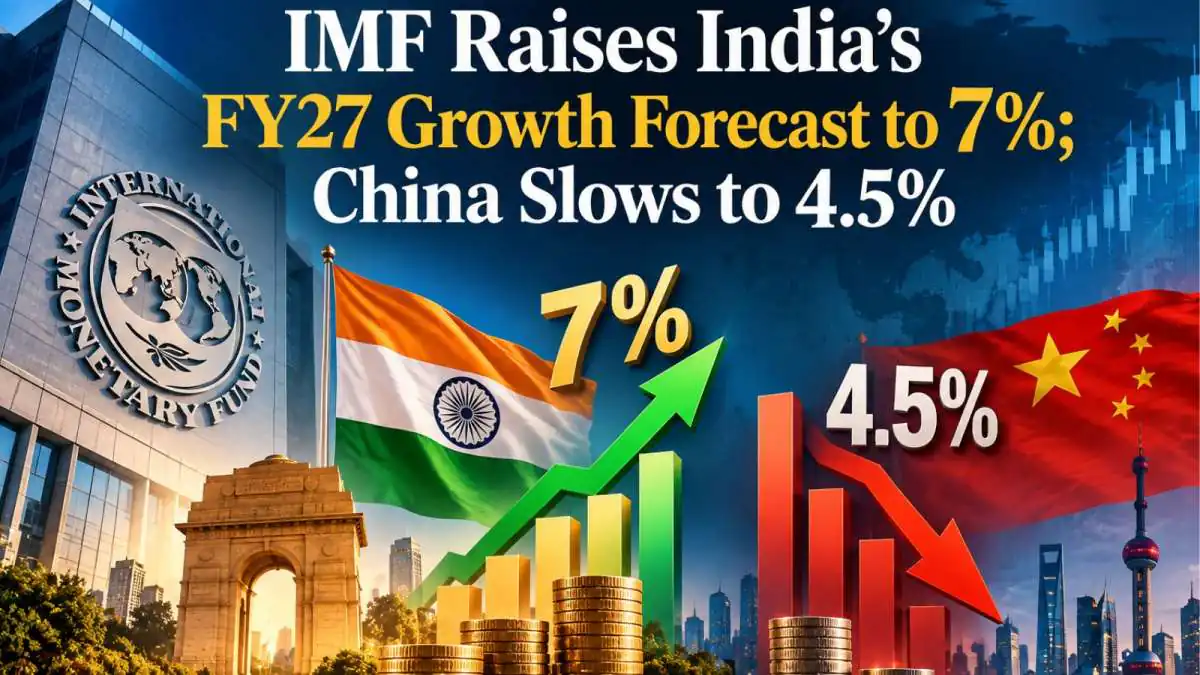
“IMF Raises India’s FY27 Growth Forecast to 7%; China Slows to 4.5%”

Read more onwww.entrepreneuroutreach.com/s/bb2439
13 Oct 2026
Key Highlights
- Upgrade: IMF raised India’s FY27 growth forecast to 7.0%, up 0.6 points from July.
- Calendar year: 7.4% in 2026 and 7.0% in 2027.
- Far ahead: China is projected at 4.5%, the US at 2.3% and the world at 3.1%.
- The costs: Inflation seen rising to 5.0% and the current account deficit widening to 1.5% of GDP.
- Fiscal praise: India singled out as an exception on stabilising public debt.
The International Monetary Fund has raised its forecast for India’s economic growth to 7.0% for 2026-27, saying the country “remains among the fastest-growing major economies” even as a war in the Middle East and higher oil prices weigh on much of the world.
In its October 2026 World Economic Outlook, the IMF projected India’s growth at 7.0% for both FY27 and FY28. The FY27 forecast is 0.6 percentage points higher than in July. On a calendar-year basis, it projected 7.4% growth in 2026 and 7.0% in 2027. India grew 7.8% in 2025-26, according to the report.

The upgrade “reflects stronger-than-expected momentum, supported by resilient domestic demand and robust services activity,” the IMF said.